Wildlife of Fuerteventura: Discover the Island’s Most Fascinating Animals
Explore the wildlife of Fuerteventura: unique bird species, spectacular marine life, and land animals that will truly surprise you. A complete guide for nature lovers.
A Wild Island: This Is the Wildlife of Fuerteventura
Fuerteventura is much more than dunes, volcanoes, and endless beaches. Beneath its arid and desert-like appearance lies a surprising biodiversity, with species uniquely adapted to a demanding environment. From island-exclusive birds to curious mammals and an incredibly rich marine life, Fuerteventura’s wildlife is a true treasure for nature enthusiasts.
The island’s location between Europe and Africa makes it a strategic stopover for migratory birds, while its crystal-clear waters are home to whales, dolphins, sea turtles, and brightly coloured fish. Even on land, among shrubs and volcanic plains, you’ll find creatures that have made this otherworldly landscape their home.
In this article, we invite you to discover the island’s most iconic animals and the best spots to observe them always with respect and care for the natural environment.
This article contains the following sections:
- What Animals Can You See in Fuerteventura?
- Land Mammals in Fuerteventura
- Birds of Fuerteventura
- Common Fish and Molluscs in Fuerteventura
- Conclusion
What Animals Can You See in Fuerteventura?
Despite its dry climate and desert like look, Fuerteventura is home to a remarkable variety of animal species. In this guide, we explore the three main categories that make up the island’s most representative wildlife: land mammals, birds (many of them unique to the Canary Islands), and the rich marine life that thrives in its clear waters.
Each group reveals how nature adapts, evolves, and flourishes even in the most extreme environments.
Land Mammals in Fuerteventura: Native Species and Curious Facts
While Fuerteventura isn’t known for a wide variety of wild mammals, it is home to several fascinating species that have adapted remarkably well to its arid, volcanic landscape. Many arrived with human settlers or were introduced for farming and subsistence purposes, while others like the goats have become almost symbolic of the island.
Here, we introduce the most representative mammals you may come across during your visit, along with their unique traits and some interesting facts.
Majorera Goat (Capra aegagrus hircus)
Undoubtedly the most visible and iconic mammal on the island. The Majorera goat is a native breed, raised for centuries thanks to its resilience to dry climates and the high quality of its milk, which is the basis for the famous Majorero cheeses with Protected Designation of Origin.
Although many are kept on farms, it’s not unusual to see them roaming freely through ravines or hillsides, especially in less urbanised areas.
Fun fact: The Majorera goat is considered one of the world’s most productive and resilient goat breeds.
Wild Rabbit (Oryctolagus cuniculus)
Originally introduced from mainland Spain, the wild rabbit is now one of the most common species in Fuerteventura’s rural areas. Its population fluctuates due to viral diseases, but you can still spot them easily in open areas at dawn or dusk.
Aside from being a game species, the rabbit also plays a vital role in the island’s ecosystem.
Canarian Shrew (Crocidura canariensis)
Tiny, elusive, and largely unknown to visitors, the Canarian shrew is one of the few mammal species endemic to the Canary Islands. It lives in rocky, humid zones, hidden among the vegetation. Though hard to spot, it holds great biological interest.
Barbary Ground Squirrel (Atlantoxerus getulus)
Although not native, the Barbary ground squirrel has become a tourist favourite thanks to its charming appearance and tame behaviour. Introduced in the 1960s, it has since spread across much of the island.
You’ll often see them near viewpoints, picnic areas, and rural tracks. However, feeding them is strongly discouraged, as it disrupts the island’s ecological balance.
Other Mammals: Feral Cats, Donkeys, and Hedgehogs
In some of Fuerteventura’s rural and natural areas, you might also encounter feral cats, donkeys, or even Algerian hedgehogs (Atelerix algirus). The latter are nocturnal and quite shy, but they are nonetheless part of the island’s diverse fauna.
Tips for Wildlife Watching
- The best times to spot wild mammals are at sunrise and sunset.
- Many species stay hidden in remote or hard-to-reach places, such as ravines and volcanic badlands.
- Always observe respectfully: do not feed the animals, avoid getting too close, and never attempt to touch them.
Birds of Fuerteventura: Unique Species and Where to Spot Them
Fuerteventura is a true gem for birdwatching enthusiasts. Its semi-desert climate, sparse vegetation and proximity to the African continent have given rise to a unique ecosystem, home to resident, migratory and endemic bird species.
The island lies on key migratory routes and is also home to protected species that can only be seen here or on other Canary Islands. From majestic birds of prey to small steppe birds, Fuerteventura offers unforgettable birdwatching experiences all year round.
Egyptian Vulture or ‘Guirre’ (Neophron percnopterus majorensis)
The guirre is one of Fuerteventura’s ornithological treasures. It is a subspecies of the Egyptian vulture, found nowhere else in the world and currently endangered. With its striking black-and-white plumage, yellow face and graceful flight, it is often seen soaring in search of carrion.
Where to spot it: Southern ravines, La Oliva, Betancuria, and around goat farms and cheesemakers.
Did you know? The guirre is the only vulture species found in the Canary Islands and is protected by European conservation programmes.
Canarian Houbara Bustard (Chlamydotis undulata fuertaventurae)
An endemic species found only on Fuerteventura and Lanzarote. With a stocky build and cryptic plumage, the houbara is hard to spot due to its camouflage, making it one of the most sought-after sightings. It inhabits flat, arid areas, largely untouched by human development.
Where to spot it: Plains of Tindaya, Jandía, and inland Tuineje.
Fun fact: Despite its bulky appearance, it can run at great speed when alarmed.
Lapwings, Stonechats, Thick-knees and Other Steppe Birds
Fuerteventura’s landscape is dotted with birds typical of open, steppe-like habitats. Common species include:
- Northern Lapwing (Vanellus vanellus)
- Canary Islands Stonechat (Saxicola dacotiae) – endemic to Fuerteventura
- Eurasian Stone-curlew (Burhinus oedicnemus)
- Trumpeter Finch (Bucanetes githagineus) – easily recognised by its call
Where to spot them: Interior plains and uncultivated, undeveloped areas.
Tip: Best spotted at dawn or dusk using binoculars from marked walking trails.
Migratory Birds: Flamingos, Herons, Plovers and Waders
Fuerteventura’s wetlands, salt pans and ponds are vital stopovers for migratory birds travelling between Europe and Africa. During migration seasons (spring and autumn), you may see:
- Greater Flamingos (Phoenicopterus roseus)
- Grey Herons and Little Egrets
- Ringed Plovers, Whimbrels, and various sandpipers
Where to spot them: Salinas del Carmen, Costa Calma pond, and Los Molinos reservoir.
Canarian Raven (Corvus corax canariensis)
The raven is one of the most charismatic and easily recognisable birds on the island. The canariensis subspecies is slightly smaller and has a shorter beak than its European cousin. These birds are incredibly intelligent, sociable and possess remarkable vocal abilities.
Where to spot them: All over the island, especially in higher areas like Betancuria, scenic viewpoints and rocky outcrops.
Fun fact: In the Canary Islands, ravens are a symbol of wisdom and feature in many local legends.
Herons of Fuerteventura: Little Egret and Grey Heron
Herons are commonly found in wetland areas, but they also appear near farmland, reservoirs and even quiet beaches. The two most frequent species are:
- Little Egret (Egretta garzetta): small, white, elegant, with black legs
- Grey Heron (Ardea cinerea): larger, greyish, with slow, majestic flight
Where to spot them: Salinas del Carmen, Los Molinos reservoir, Río Cabras ravine, and irrigation areas.
Birds of Prey in Fuerteventura: Beyond the Guirre
Besides the iconic guirre, Fuerteventura hosts several other raptors patrolling its skies:
- Common Kestrel (Falco tinnunculus canariensis) – very common, often seen from the road
- Buzzard (Buteo buteo insularum) – medium-sized with elegant gliding flight
- Eurasian Hobby (Falco subbuteo) – less frequent but possible to spot in summer
- Barn Owl (Tyto alba) and Long-eared Owl (Asio otus) – harder to see but present
Where to spot them: Open areas, rocky hillsides, cliffs, and quiet rural zones.
Birdwatching Tips
- Bring binoculars or a camera with zoom
- Avoid loud noises or sudden movements
- Don’t try to approach or feed the birds
- Many species are spotted along walking routes – check marked trails
Common Fish and Molluscs in Fuerteventura: Marine Diversity in Every Corner
Marine Life in Fuerteventura
A hidden treasure beneath the Atlantic waves
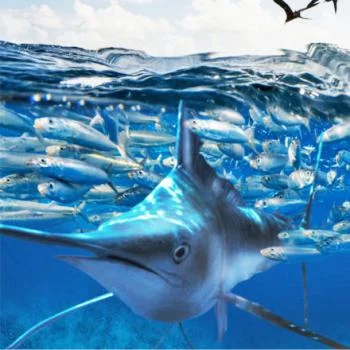
The marine fauna of Fuerteventura is as varied as it is spectacular. Thanks to its clean waters, its proximity to the African continent, and its strategic location in the Atlantic, the island boasts a unique biodiversity that attracts scientists, divers, and sea lovers alike. From turtles and dolphins to schools of tropical fish and endemic species, the underwater life is one of Fuerteventura’s greatest natural treasures.
Dolphins and Whales: The Cetaceans of Fuerteventura
Cetaceans are key protagonists in the waters surrounding the island. They can be seen year-round, especially on organized boat excursions.
- Bottlenose dolphin and common dolphin: the most frequent and easy to spot.
- Pilot whales, fin whales, and occasionally sperm whales: larger and less common.
- Best areas to see them: the west coast, between Morro Jable and the northern tip of the island, especially in deep waters.
Sea Turtles: Honoured Guests Along the Coast
The loggerhead turtle (Caretta caretta) is the most common species and is protected. Occasionally, they nest on some of the island’s beaches. Rescued and rehabilitated turtles can also be found thanks to local NGOs.
- Top spots: peaceful beaches in the south and east, especially Cofete, Costa Calma and Grandes Playas.
Tropical and Endemic Fish: Colours of the Atlantic
The island’s crystal-clear waters reveal a wide variety of fish:
- Parrotfish (locally known as vieja): also highly valued in Canarian cuisine.
- Seabream, salema, groupers, trumpetfish and dusky groupers.
- Exotic species such as the angelfish or pufferfish can be spotted on certain dives.
- Ideal areas for snorkelling or diving: El Puertito (Lobos Island), Playa Chica, Caleta de Fuste, La Lajita.
Common Fish and Molluscs: Between Snorkelling and Cuisine
The sea around Fuerteventura is home to a wide variety of fish and molluscs enjoyed by both tourists and locals—whether while snorkelling or in local dishes. Here are some of the most commonly seen underwater species and the most frequent ones on restaurant menus:
- Cuttlefish: The local squid, highly appreciated in Canarian cooking. They can also be spotted while snorkelling, especially in shallow areas.
- Common fish in restaurants:
- John Dory (gallo): a flat-bodied fish, commonly served in local eateries.
- Red seabream (bocinegro): a dark, elongated fish with excellent flavour.
- Moray eel: not always visible, but it inhabits rocky seabeds and is one of the most distinctive marine species.
- Best viewing spots: rocky seabeds, especially off Lobos Island, Playa Chica and Morro Jable.
Crustaceans, Urchins and Other Marine Species
Besides fish, the seabed is full of small, fascinating creatures:
- Sea urchins: very common on rocks and sandy bottoms. It’s best not to touch them, as their spines can be dangerous.
- Blennies (fulas): also known as sea fleas, these small marine creatures are found among rocks, especially at low tide.
- Hermit crabs and limpets: found in tidal pools, particularly visible at low tide.
- Viewing spots: rocky seabed areas, low-tide zones such as Las Playitas, Playa del Matorral and Costa Calma.
Tips for Responsible Marine Wildlife Observation
Observing marine life should always be done in a way that respects the environment. Here are some tips to enjoy these natural wonders without causing harm:
- Do not touch or disturb the animals: Even if marine creatures seem friendly, avoid touching or altering their habitat.
- Use proper equipment: When snorkelling or diving, make sure your gear won’t damage corals or the seabed.
- Keep a safe distance: Don’t get too close to animals, especially turtles and dolphins, to avoid stressing them.
- Respect protected areas: Some marine areas are protected, like the Natural Park of Lobos Island, where extra care is required.
Conclusion: Enjoy Fuerteventura’s Unique Wildlife Responsibly
Fuerteventura is not only known for its stunning landscapes, but also for its rich biodiversity, both on land and underwater. From endemic mammals to fascinating marine life, the island offers a unique immersive nature experience. When snorkelling, diving or spotting wildlife, it’s essential to follow responsible practices to help protect these valuable ecosystems.
We invite you to discover the wildlife of Fuerteventura in a sustainable and safe way, through guided activities that allow you to get to know its most iconic species up close.